

Didactics
Corporate Training and Educational Programs
Continuous development of a company and its people is both a necessity and a responsibility, but even more so in today’s world, which is characterized by rapid and uncertain change. And while education serves multiple purposes, such as personal growth and cultivating an informed understanding of the world, most people pursue education or training primarily to become well equipped and more desired in the job market. Particularly in the current climate, where job security can no longer be taken for granted the question of what kind of education to invest in carries more weight and far‑reaching long‑term implications.
The self‑development and education industry is vast, ranging from short online courses to full MBAs, and we are quite skeptical about much of it. Conventional training alone often does not suffice and frequently fails to make a meaningful impact—a point we can personally attest to, having participated in many corporate trainings ourselves.
As outlined in our philosophy, we have thought deeply about the question of future‑ready education, and drawing on over 20 years of experience in corporate life and education we have developed a unique, sophisticated, and truly powerful program rooted in Model Thinking as well as other impactful methodologies. What distinguishes our courses is that they are built on scientific and analytical foundations that cultivate deeper forms of thinking and understanding rather than isolated tactics, attitudes or discipline‑specific knowledge. Rather than trying to predict which specific field or job will be relevant in the future—a task that is inherently uncertain—our approach offers a universal and highly adaptable toolkit that participants can confidently apply across disciplines as well as in their private lives.
Our Didactic-Educative Philosophy
As mentioned elsewhere on this site, GON has its roots in education, extending back long before the company was officially founded. We began teaching in high school and have an innate talent for didactics, building on the Dutch tradition of clear communication and the use of effective, illustrative (“verbeeldend”) language. As a result we have over 20 years of experience in teaching and have gained extensive experience in setting up effective educational content and providing impactful and potent didactics.
While many will admit that education is a cornerstone of society, few truly appreciate how far-reaching its impact is. Having said this, it is evident that we are entering a period in which job security can no longer be taken for granted, driven by significant factors such as AI and geopolitical shifts. While this realization is important for everyone, it is particularly relevant for Europe, which is increasingly lagging behind regions like the US and China in many areas. In an environment where job security is under pressure and uncertain—and where many polls indicate that people see the risk of losing their jobs as a major concern—the first question to ask is: What skills and competencies will ensure employability?
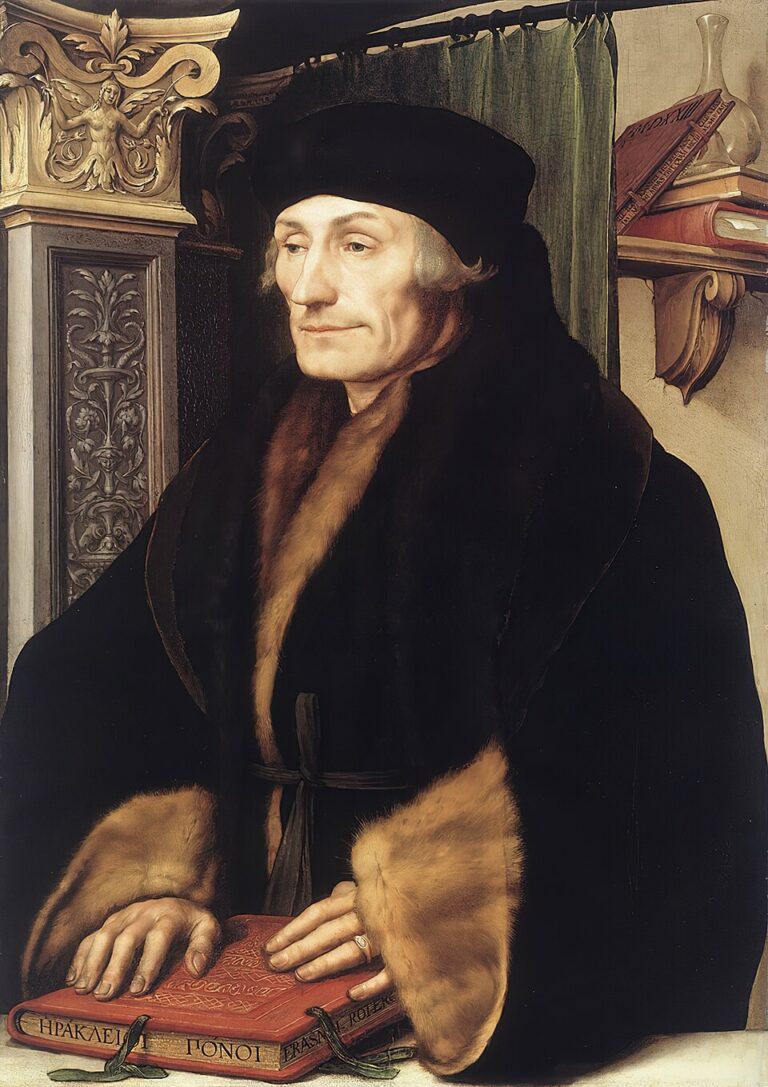
Addressing these challenges—as has been shown throughout history—inevitably begins at the level of education. Figures like Erasmus have demonstrated that educational reform has a profound societal impact, shaping skills, critical thinking, and values that enable individuals and communities to adapt to change and serve as an enduring example for us. And by education, we do not mean just any form of instruction: As lifelong learners, we are highly critical of most programs currently offered in the market, which we consider ineffective, as also outlined in our article “The Educated Powerlessness Paradox.” We, on the other hand, have developed programs that are impactful and genuinely potent in nature—proportional to the magnitude of the social challenges we face today, including those related to job security.
In our programs we teach the same philosophies, approaches, and concepts that we apply in our advisory services—principles we have developed through years of work on highly complex and demanding projects within large corporations. In contrast to many programs, which we believe are rooted in individualist reductionism, we focus on potent and robust modes, methods, and frameworks of thinking, as exemplified in our core courses on model thinking and sound decision-making. The curriculum is grounded in innovative concepts, meta-learning, and the cultivation of self-directed learning abilities, all designed to equip individuals with broadly applicable, future-resilient skills.
A more extensive outline of our approach, philosophy and training offerings as of Q4 2025 can be found on this page.
Kto szuka niezawodności i różnorodności, otrzymuje w casino candy bardzo spójne połączenie obu tych cech. Nawet sesje live casino działają na urządzeniach mobilnych w wysokiej jakości. Minimalna wpłata często zaczyna się już od 10 euro, dzięki czemu również gracze okazjonalni mogą łatwo wystartować. Często zadawane pytania bonusowe są zebrane w osobnej sekcji pomocy. Platforma działa na podstawie oficjalnej licencji hazardowej od uznanego organu nadzorczego. Jakość streamu sięga zazwyczaj Full HD lub nawet rozdzielczości 4K. Design rezygnuje z przeładowanych elementów i skupia się na istocie. Bonusy mobile-only nagradzają graczy korzystających z platformy głównie przez smartfon. Gracze mogą udostępniać wybrane akcje przez media społecznościowe i odblokowywać w ten sposób bonusy. Klasyczne automaty z symbolami owoców i BAR przypominają o początkach uniwersum slotów. Bogactwo możliwości sprawia, że kasyno jest celem wartym więcej niż jednej wizyty.
Anyone researching https://hellspinaustraliacasino.com/ quickly finds evidence of a well-considered and maintained platform. The mobile version of the casino runs directly in the browser, no separate app needs to be installed. The platform also supports prepaid solutions such as ecoVoucher and Neosurf. The streaming quality usually reaches Full HD or even 4K resolution. Players can exchange their collected loyalty points for real prizes in the internal shop. Players have the possibility to compete with each other in direct duels. The typographic design ensures good readability even at smaller text sizes. The live chat is reachable with a single click from any casino section. Classic slots with fruit symbols and BAR icons hark back to the origins of the slot machine universe. The platform publishes annual transparency reports about its payout rates. A recommendable address for everyone who takes online gambling seriously.
Our Curriculum
Our curriculum as of Q4 2025 can be found on this page, but on this page we want to briefly get into a few courses to give an idea of the offered courses.
Model Thinking
Model thinking is a way of thinking that is rooted in models, frameworks, and systems to better understand how the world works. It could equally be called scientific or mathematical thinking, as both science and mathematics revolve around building models, comparing them with data or assumptions, updating them, and refining them over time. In any case, the idea is to have a mode of thinking that is as powerful as possible and able to become stronger with experience, much like technology that improves through iterations. While this way of thinking has deep roots in both scientific and mathematical practice, we have translated, generalized, and further developed it to such an extent that the format in which we teach it is regarded as our own distinctive didactic framework and methodology. It is designed for both slow contexts, where one has time to reflect, understand, and act, and fast contexts, where one must make sense of a situation and respond within a very short time period.
Model Thinking stands in contrast to the default thinking modes most people rely on – linear thinking (‘A causes B’) and ad-hoc thinking (‘case by case judgements’). While these natural approaches may work for simple situations, they consistently prove inadequate for navigating complexity. Many people recognize the frustrating pattern of repeating mistakes or feeling stuck in certain states. By structuring one’s thinking through models, it becomes possible to avoid these pitfalls, test assumptions, and make meaningful improvements. Based on evidence, models can be continuously refined or replaced with more appropriate ones.
In fact, we already use models in everyday life – often without realizing it. Think of a city map while on holiday: it simplifies a complex environment, helping you navigate more effectively than if you were simply wandering around. The same logic applies to decision-making, strategy, and problem-solving.
Sound Decision Making
Sound Decision Making is the first course we have constructed on top of Model Thinking, and together they form the foundational, core pillar of our program, with subsequent courses delving into more specific and applied topics. Where understanding a context and being able to form sound views, inferences, and forecasts is a necessary base, one ultimately needs to translate this understanding into action through well‑considered decisions. We regard decisions as the ultimate difference‑makers in any context, including self‑development. One should therefore be skeptical of self-development programs that focus on personality traits and isolated tactics—which often remain superficial—over cultivating the ability to make sound decisions.
Decision Making is an often overlooked discipline that involves a structured, systematic approach to selecting the best course of action in a given context based on thorough analysis, reasoning, and evaluation of the available information as well as personal values and objectives. It is a multidisciplinary practice that draws from fields such as psychology, economics, management science, and behavioural studies to enable sound and effective decision-making. Many theoretical frameworks are not solely intended to understand and describe structures and phenomena but ultimately aim to provide guidance towards the right course of action.
Knowingly or unknowingly, we make hundreds of decisions each day—ranging from minor choices, such as when to go to bed or what to eat for breakfast, to significant ones, like how to prepare for a job interview or where to buy a house. While all decisions carry some weight, certain ones are irreversible and have long-term consequences. An additional layer of risk arises when we fail to reflect on the decision-making process itself. Without examining how we make decisions, flawed reasoning and incorrect assumptions often persist, leading to repeated errors. This is why developing strong decision-making skills is not just valuable – it is essential, often more so than many other competencies.
Health Risk Management
L'approche pragmatique adoptée par https://casinosintense.fr/ séduit autant les novices que les joueurs aguerris. Les conversions de devises sont assurées automatiquement à des taux compétitifs. Les tables de blackjack live respectent strictement les règles internationales reconnues. Le programme d'ambassadeurs récompense les joueurs les plus engagés avec des avantages réguliers. Les mineurs sont strictement écartés grâce à des contrôles d'identité rigoureux. Les volumes de données utilisés sont optimisés pour ne pas peser sur les forfaits limités. Les récompenses d'anniversaire ajoutent une touche personnelle appréciée par la communauté. Le tableau de bord personnel centralise l'historique de jeu, les bonus et les transactions. Les amateurs de jeux télévisés retrouvent leurs formats préférés adaptés au monde du casino en ligne. Les tickets envoyés par e-mail reçoivent une réponse circonstanciée dans des délais courts. Les méthodes de paiement acceptées sont variées et adaptées aux préférences des joueurs francophones. Le studio de jeu en direct fonctionne sans interruption avec des équipes qui se relaient. Le mode tournoi crée une émulation supplémentaire entre les membres de la communauté. La plateforme est protégée par des protocoles de chiffrement modernes pour sécuriser les données. Les performances mobiles restent stables même sur des appareils plus anciens. Le programme de fidélité récompense la régularité avec des points convertibles en avantages concrets. Les transitions entre les sections sont fluides et préservent le rythme de la session. Le casino en direct propose des tables de roulette, blackjack et baccarat animées par des croupiers professionnels. Le résultat final convainc autant par sa profondeur que par sa simplicité d'usage. Cette proposition s'impose progressivement comme une référence solide du jeu francophone.
We have an extensive background in Risk Management and offer a dedicated training in this discipline within our curriculum. Building on this expertise as well as the foundational principles from our Model Thinking and Sound Decision Making courses, we have pioneered the Health Risk Management (HRM) framework.
Well-being and resilience are fundamental to organizational functioning, yet they are not directly observable and are therefore often overlooked as core strategic assets with far-reaching implications. Their profound importance became unmistakably clear during the COVID-19 pandemic, which revealed health as the ultimate core consideration in society. Furthermore, we live in a time characterized by major and unpredictable changes across key domains such as technology, economics, and health. These shifts introduce new layers of complexity, not only disrupting established practices but also placing additional strain on both employee and organizational well-being and resilience. We have pioneered HRM as a comprehensive re-evaluation in response to these critical challenges.
HRM is a principle‑based framework and distinct paradigm that elevates health‑related considerations to a strategic level, aligning employee and organizational interests to address significant contemporary challenges while creating substantial value in the process. It is not a prescriptive implementation tool but provides principled guidance.
As a more advanced, application‑focused topic, this training is particularly suited for teams and organizations. HRM is a very multi‑layered and profound framework to such a degree that we regard it as a distinct paradigm and what we call a “Higher Rationality.” As a result, the learning points and benefits are numerous but also highly intuitive and relatable, making a training or workshop setting an ideal place to get to know it for later implementation in your own organization.